2026-05-29
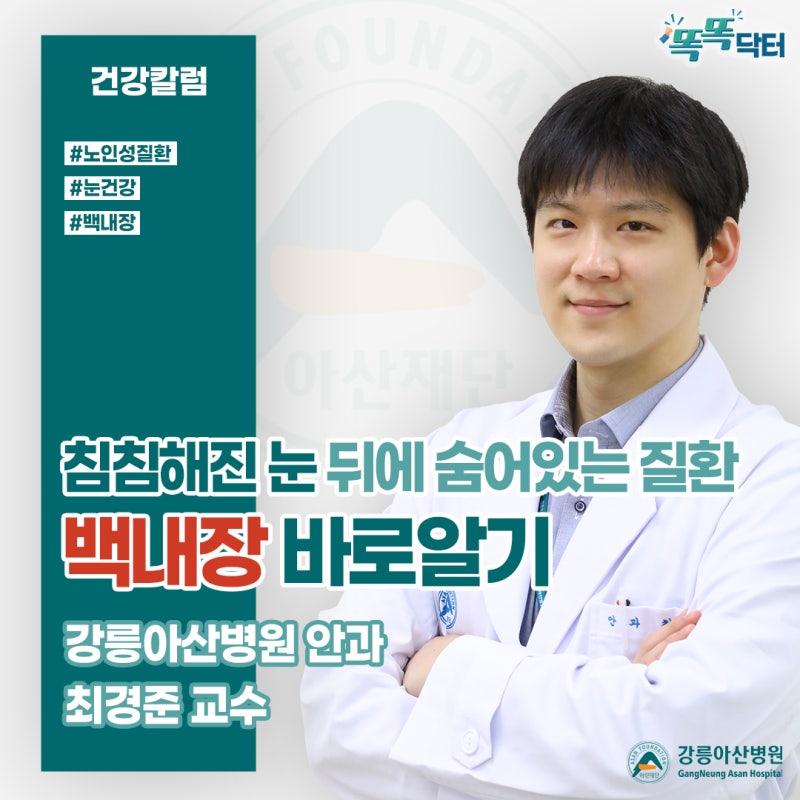
Understanding Cataracts: The Disease Hidden Behind ‘Cloudy Vision’ - Professor Choi Kyung-jun, Ophthalmology, Gangneung Asan Hospital
Learn about cataract symptoms, causes, and treatments. Professor Choi Kyung-jun explains why regular check-ups are vital for vision health as we age.

Is the change in your vision as you age actually a cataract?🤔
Many people feel their vision is not what it used to be as they get older. While it is easy to assume you simply need new glasses, cataracts are often the underlying cause. A cataract is a condition where the crystalline lens inside the eye becomes cloudy, blurring your vision. It is characterized by feeling as though you are looking through a fogged-up window. Because cataracts progress slowly, by the time a person feels their ‘vision is cloudy’ or ‘not sharp even with glasses,’ the condition has often already progressed significantly. A Common Condition Anyone Can Experience Most cataracts are degenerative changes caused by aging. However, they can also occur in younger people. Causes can include trauma, diabetes, atopy, long-term steroid use, and genetic factors; in rare cases, they can be congenital. While smartphone or computer use is not a direct cause, the eye fatigue and dryness resulting from prolonged use can worsen vision decline. These discomforts often serve as the catalyst for early detection during an eye exam. Early Symptoms of Cataracts Cataracts progress gradually, presenting symptoms such as blurry vision, double vision, or colors appearing faded. You may experience severe glare from strong lights like sunlight or car headlights, making night driving difficult. If your vision does not improve despite changing glasses, an ophthalmology consultation is necessary. Regular check-ups are recommended for those aged 60 and older, even if they have no symptoms.
Why It Is Easily Confused with Other Eye Diseases Cataract symptoms are similar to those of presbyopia, macular degeneration, glaucoma, and diabetic retinopathy. Presbyopia is characterized by difficulty seeing close-up text, while macular degeneration causes the central vision to appear distorted or dark. However, it is difficult for patients to distinguish these differences on their own, making professional ophthalmological care essential. If patients delay an eye exam based on their own assumption that it is just a cataract, they may miss the diagnosis of more serious conditions. Therefore, it is important to be examined by an ophthalmologist. Surgery Over Medication To date, there is no medication that can completely cure cataracts. If vision loss has progressed enough to interfere with daily life, surgery is the only treatment method. In some cases, a progressing cataract can trigger acute angle-closure glaucoma, so surgery should be decided upon without delay if symptoms worsen. Cataract surgery is performed under local anesthesia and is generally painless. The procedure is short, taking about 10 to 20 minutes, and same-day discharge is usually possible. While incisions were large in the past, micro-incisions are now used, leading to faster recovery and fewer side effects. However, surgery may be performed under general anesthesia for minors or patients with conditions like claustrophobia who may find it difficult to cooperate under local anesthesia. If there are no other eye diseases, the vision recovery rate after surgery is very high. Recently, multifocal intraocular lenses that can also correct presbyopia have become an option, allowing for enhanced vision improvement tailored to individual needs.
Prevention and Lifestyle Habits While cataracts cannot be completely prevented, there are ways to slow their progression: UV protection (wearing sunglasses), quitting smoking, managing blood sugar and blood pressure, avoiding long-term steroid use, and regular eye exams. Especially for those with diabetes or those taking steroids long-term, early diagnosis and timely surgery are the best ways to protect your vision.
Professor Choi Kyung-jun, Department of Ophthalmology, Gangneung Asan Hospital ‘Cataracts are common, but if left untreated, they can lead to vision loss. Protect your eye health through regular check-ups and early treatment.’ – Professor Choi Kyung-jun, Department of Ophthalmology, Gangneung Asan Hospital