2026-09-13
Prof. Yu Young-sang of Gangneung Asan Hospital Receives Best Paper Award for Q2 2026
Prof. Yu Young-sang of Gangneung Asan Hospital won the Q2 2026 Best Paper Award for identifying the anti-allergic efficacy and mechanisms of Chamaecrista nomame extract and luteolin for asthma.
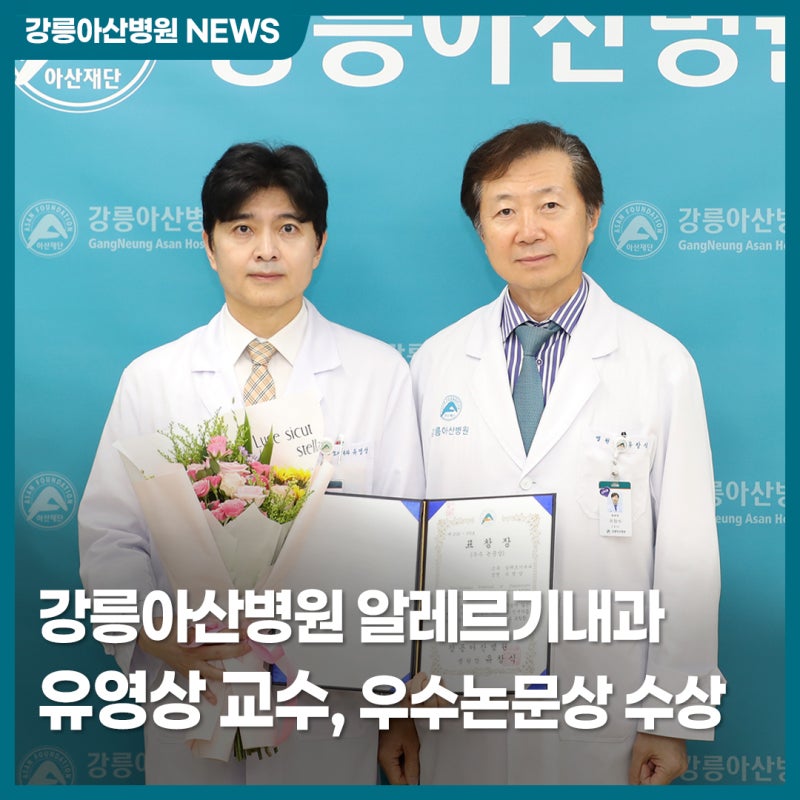
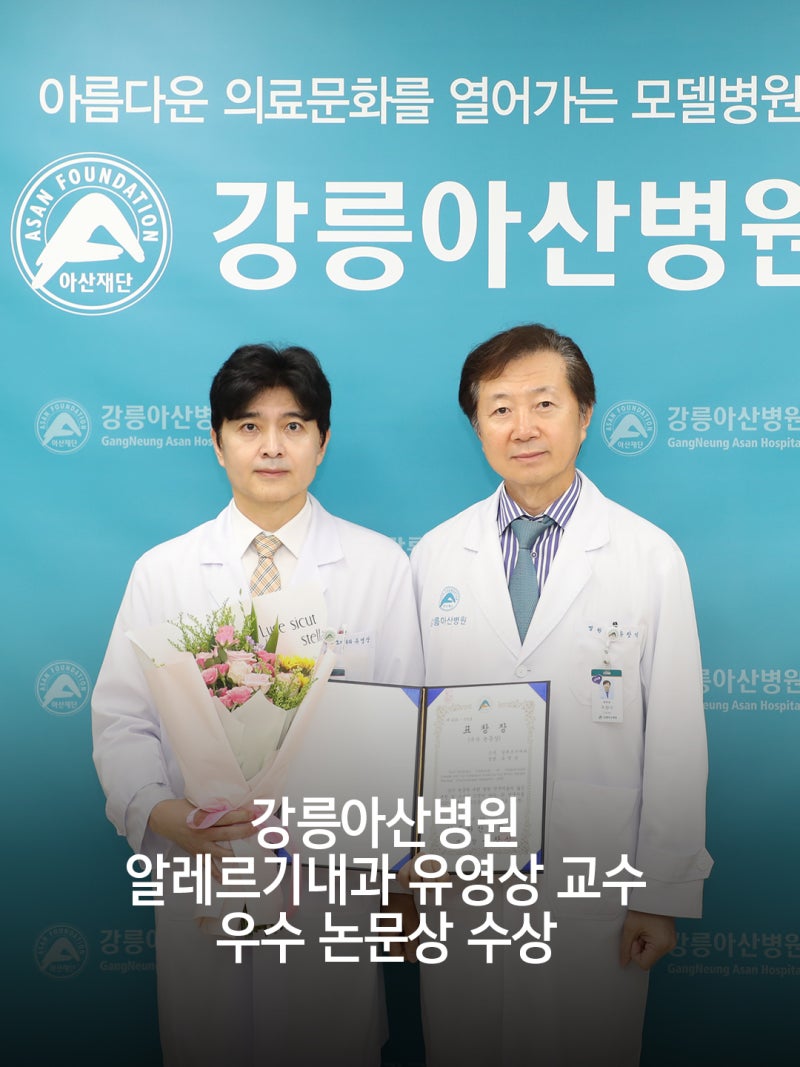
Professor Yu Young-sang of the Division of Allergy and Clinical Immunology at Gangneung Asan Hospital has been selected as the recipient of the Best Paper Award for the second quarter of 2026. 👏
Professor Yu published research confirming the potential of natural substances for the treatment of allergic asthma.
After examining 302 plant species native to Korea, the study confirmed that Chamaecrista nomame (tea senna) extract is effective in reducing allergic and inflammatory reactions,
and also uncovered the mechanism of action of luteolin, the main active compound of Chamaecrista nomame.
This study is significant in that it demonstrates the potential of Chamaecrista nomame and luteolin to be utilized as novel therapeutic candidates
for the treatment of allergic asthma in the future. 🔬




Frequently Asked Questions
What award did Professor Yu Young-sang receive?
He received the Best Paper Award for the second quarter of 2026. Professor Yu Young-sang of the Division of Allergy and Clinical Immunology at Gangneung Asan Hospital was selected for this honor in recognition of his research achievements on natural substances related to the treatment of allergic asthma.
What is the key natural substance investigated in this study?
It is Chamaecrista nomame (tea senna), native to Korea. After screening and analyzing 302 native Korean plant species, the research team confirmed that the extract of Chamaecrista nomame effectively suppresses allergic and inflammatory reactions.
What is the primary active compound identified in Chamaecrista nomame?
The primary active compound is luteolin. Through his study, Professor Yu identified the specific mechanism of action through which luteolin, the key component of Chamaecrista nomame, alleviates allergic and inflammatory responses.
What is the clinical significance of these research findings?
It opens up possibilities for new therapeutic candidates in the treatment of allergic asthma. The study scientifically verified that Chamaecrista nomame and its luteolin component can be promising resources for future allergic asthma drug development.